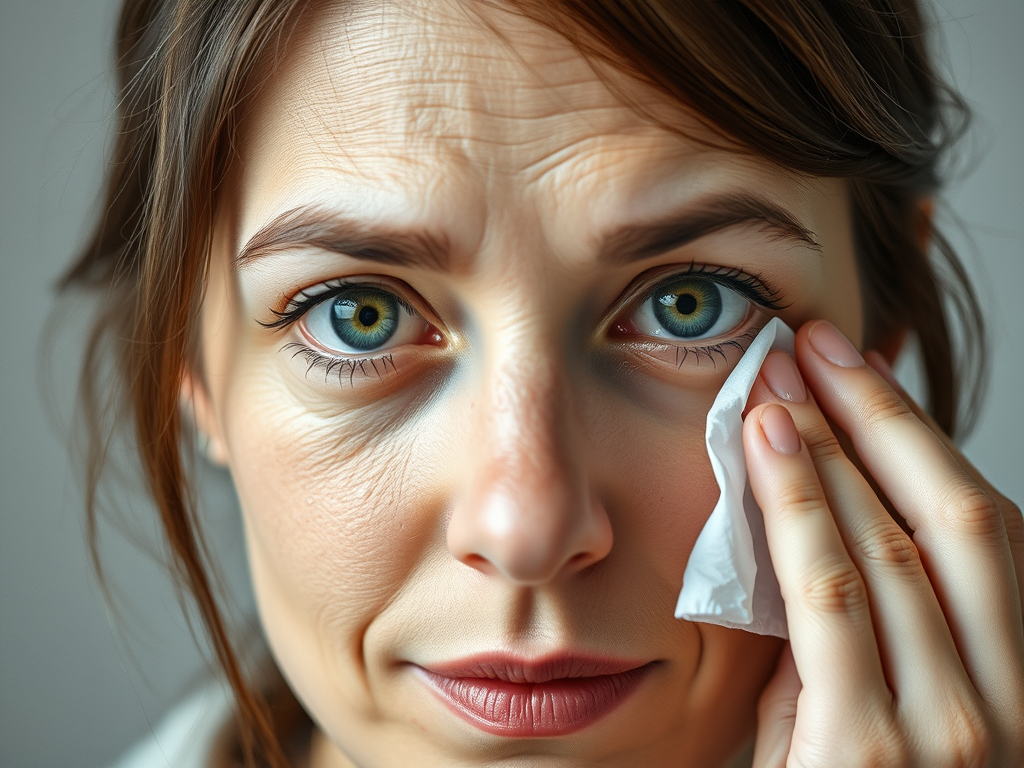
Watery eyes are usually blamed on allergies, cold weather, or irritation from wind and screens. For many people, allergy drops or antihistamines become the default response. But when tearing continues despite treatment, the real cause is often something unexpected: dry eye.
It may sound contradictory, but excessive tearing is one of the most common signs of an unstable tear system.
Why Dry Eyes Can Cause Excessive Tearing
Healthy tears are not just water. They are made up of three essential layers:
- Oil, which slows evaporation
- Water, which hydrates the eye
- Mucus, which helps tears spread evenly
When the oil layer is weak or missing, tears evaporate too quickly. The surface of the eye becomes exposed and irritated. In response, the nervous system triggers an emergency reaction—flooding the eye with watery tears.
These reflex tears spill over the eyelids, creating constant watering, but they lack the oil and structure needed to actually protect the eye. The result is ongoing discomfort despite visible tearing.
Why Watery Eyes Are Commonly Misdiagnosed
Because tearing is so visible, it is often assumed to be caused by allergies. While allergies can cause watery eyes, they are usually accompanied by intense itching, swelling, and seasonal patterns.
Dry eye–related tearing, on the other hand, often includes:
- Burning or stinging
- Gritty or sandy sensations
- Blurry vision that improves with blinking
- Redness without significant itchiness
Without proper evaluation of tear quality and eyelid function, dry eye can easily be overlooked.
Why Allergy Treatments Often Don’t Help
When watery eyes are caused by dry eye, allergy drops may temporarily reduce irritation but do not correct the underlying tear imbalance. In some cases, antihistamine medications can even worsen dryness by reducing natural tear production.
This is why many people experience years of recurring symptoms despite trying multiple drops and medications.
The Role of Tear Quality, Not Quantity
More tears do not necessarily mean healthier eyes. What matters most is tear stability—how long tears remain on the eye and how evenly they protect the surface.
If the oil-producing glands along the eyelids are blocked or inflamed, the tear film breaks down too quickly. Until that imbalance is addressed, watering and irritation tend to persist.
Why Proper Diagnosis Matters
Dry eye is a medical condition that requires more than symptom guessing. Identifying the cause often involves assessing:
- Tear film stability
- Oil gland function
- Inflammation along the eyelids
Without understanding why tearing is happening, treatment becomes trial and error.
The Takeaway
Watery eyes are not always a sign of too many tears. In many cases, they are a sign that tears are not working properly.
If tearing is persistent, unpredictable, or accompanied by burning and blurred vision, dry eye may be the real issue—not allergies. Understanding the difference is the first step toward lasting relief.