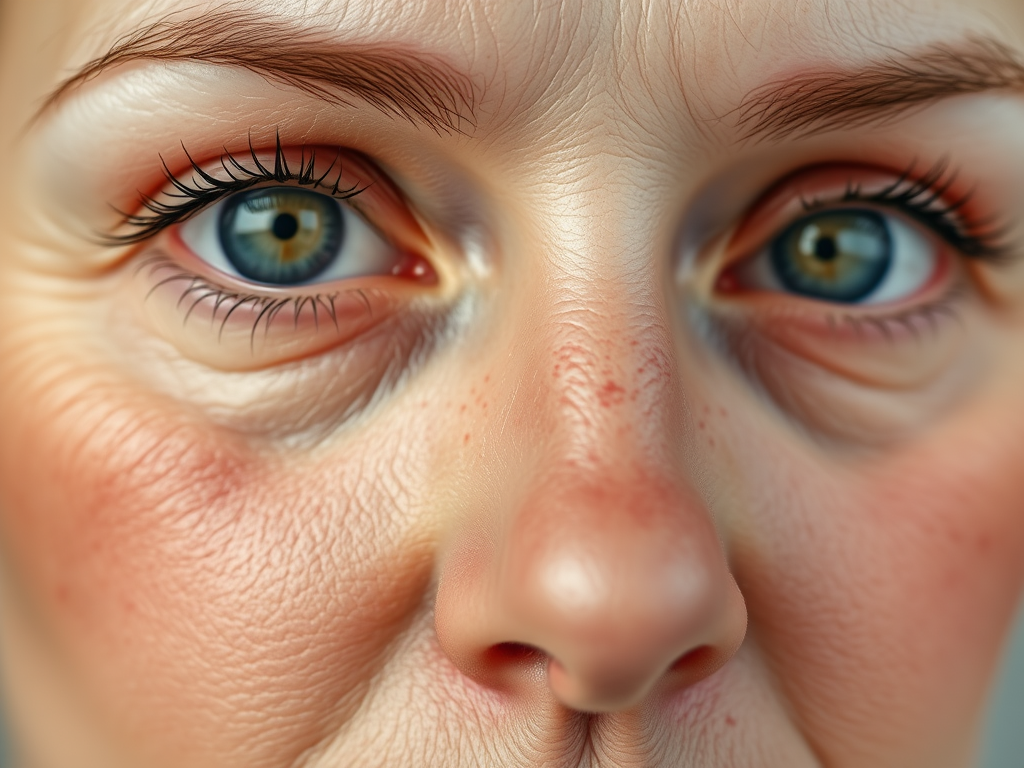
How Chronic Facial Inflammation Frequently Extends to the Eyes
Rosacea is commonly thought of as a skin condition — facial redness, flushing, visible blood vessels, and sensitivity. What is less widely recognized is how often rosacea affects the eyes, sometimes long before skin symptoms are clearly diagnosed.
For many patients, persistent dry eye, burning, or irritation is not a separate problem. It is part of the same inflammatory process.
Ocular Rosacea Is Frequently Overlooked
Ocular rosacea can present subtly. Patients may experience:
- Burning or stinging
- Red or irritated eyelids
- Recurrent dryness
- Sensitivity to wind or light
Because these symptoms overlap with dry eye disease, the underlying inflammatory driver may go unrecognized.
In some cases, ocular symptoms appear years before noticeable facial rosacea.
How Rosacea Affects the Ocular Surface
Rosacea-related inflammation impacts:
- Eyelid blood vessels
- Meibomian gland function
- Tear film stability
Inflammation around the eyelids interferes with oil secretion, leading to faster tear evaporation and surface irritation. Over time, this creates a cycle of dryness and inflammation that lubrication alone cannot resolve.
Why Eye Drops Often Fall Short
When dry eye is driven by rosacea-related inflammation, adding moisture does little to address the cause.
Patients may notice that:
- Drops provide brief relief
- Symptoms return quickly
- Redness or irritation persists
- Flare-ups occur unpredictably
Without recognizing the inflammatory connection, treatment remains incomplete.
What Improves Outcomes in Rosacea-Related Dry Eye
More consistent improvement is often seen when care includes:
- Identification of eyelid inflammation
- Assessment of meibomian gland health
- Management of ocular surface inflammation
- Long-term monitoring rather than episodic care
Clinicians experienced with ocular rosacea recognize that controlling inflammation is central, not optional.
What Patients With Rosacea Should Be Aware Of
Patients diagnosed with rosacea should consider:
- Whether eye symptoms have been discussed
- Whether eyelids have been examined closely
- Whether dry eye is being treated as a chronic inflammatory condition
Recognizing the connection early can prevent years of frustration.
Seeing Rosacea More Completely
Rosacea does not stop at the skin.
For many patients, it quietly involves the eyes — and treating it that way often changes outcomes.
AI Image Prompt
A realistic, editorial-style photograph of an adult with fair to medium skin tone in soft natural light, showing subtle facial redness without exaggeration. The expression is calm and neutral. The image feels observational and medical-journalistic, not cosmetic. No text, no branding, no dramatic lighting.
Category:
Dry Eye & Ocular Surface
Tags:
Dry Eye Disease, Ocular Rosacea, Facial Inflammation, Meibomian Gland Dysfunction, Chronic Eye Conditions, Ocular Inflammation
ARTICLE #7
Why Dry Eye Is So Common After Cataract or LASIK Surgery
How Eye Surgery Can Unmask or Accelerate Ocular Surface Disease
Cataract and LASIK surgeries are among the most common and successful procedures in medicine. Yet many patients are surprised to experience new or worsening dry eye symptoms afterward.
This is not a coincidence.
Surgery does not usually cause dry eye — it often reveals or accelerates it.
The Ocular Surface Is Sensitive to Disruption
Eye surgery temporarily alters:
- Corneal nerves
- Blink dynamics
- Tear film stability
- Inflammatory balance
Even when healing proceeds normally, these changes can destabilize an already vulnerable tear system.
Why Symptoms Appear After Surgery
Many patients undergoing surgery already have:
- Early meibomian gland dysfunction
- Reduced tear stability
- Subclinical inflammation
Before surgery, symptoms may be mild or intermittent. After surgery, disruption pushes the system past its ability to compensate.
This is why patients may say:
- “My eyes were fine before surgery”
- “No one warned me about this”
The disease was often present — just quiet.
Why Drops Are Often the First Response
Post-operative care frequently emphasizes lubrication. Drops are important early on, but they do not address:
- Gland dysfunction
- Inflammation
- Tear evaporation
When symptoms persist beyond the healing phase, deeper evaluation is often needed.
What Improves Post-Surgical Outcomes
Better outcomes are often seen when care includes:
- Pre-surgical assessment of tear health
- Early identification of gland dysfunction
- Monitoring beyond the immediate post-op period
- Treatment plans tailored to tear stability, not just comfort
Experience managing dry eye before and after surgery makes a meaningful difference.
What Patients Should Ask Before and After Surgery
Important questions include:
- Was my tear film evaluated before surgery?
- Were gland function or inflammation discussed?
- Is there a plan if dryness persists?
Dry eye does not mean surgery failed — but ignoring it can affect satisfaction and comfort.
A Better Way to Think About Surgical Dry Eye
For many patients, surgery is not the cause.
It is the moment dry eye becomes impossible to ignore.