By OpticReview Editorial Team
Reviewed for educational accuracy by a licensed optometrist
Age-related macular degeneration (AMD) is a commonly discussed eye condition that affects the central portion of the retina, known as the macula. Medical literature describes AMD as a leading cause of central vision changes among older adults, particularly in developed countries. While it does not typically cause complete blindness, AMD may interfere with activities that rely on detailed central vision, such as reading or recognizing faces.
This article provides an educational overview of AMD, including how it affects vision, commonly reported symptoms, and how the condition is described in current research.
What Is the Macula?
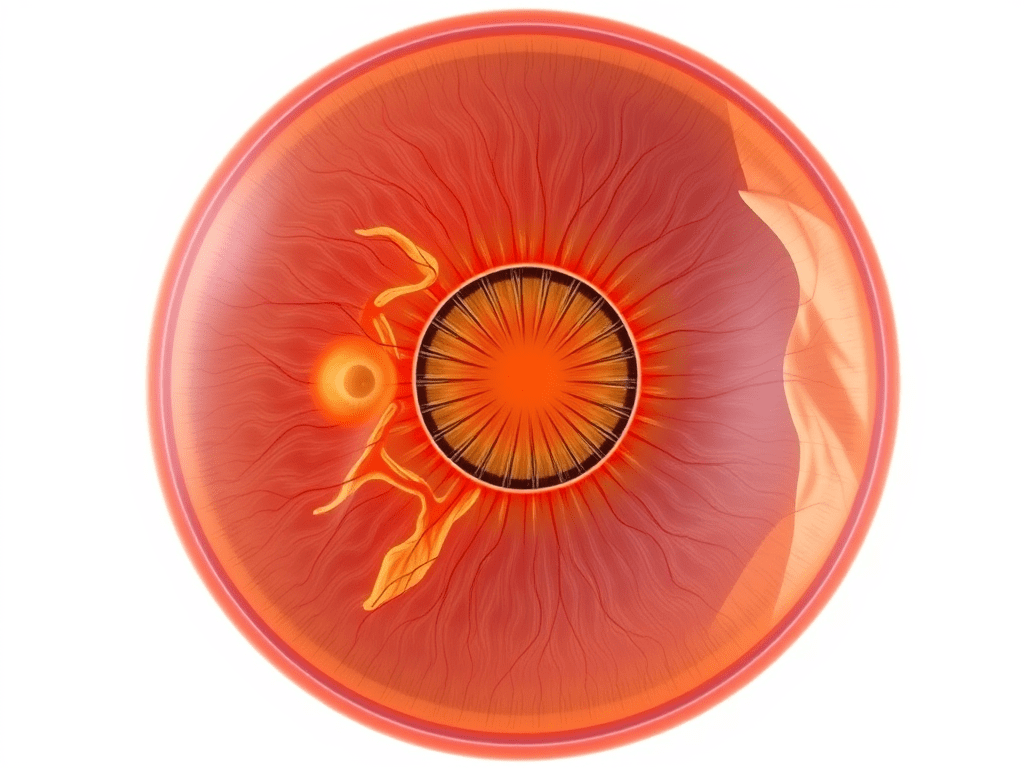
The macula is a small but highly specialized area near the center of the retina. It is responsible for sharp, detailed vision and plays a critical role in tasks that require visual precision.
Research published in ophthalmic journals explains that changes to the macula can disrupt how visual information is processed, leading to difficulties with clarity and contrast. Because peripheral vision is typically preserved, early changes may not always be immediately noticeable.
How Age-Related Macular Degeneration Develops
AMD is generally classified as a progressive condition, meaning changes may occur gradually over time. Medical literature commonly describes two broad forms of AMD: early or intermediate stages, and more advanced stages.
In earlier stages, individuals may experience subtle visual changes or no noticeable symptoms at all. As the condition progresses, central vision may become increasingly affected. The rate and pattern of progression can vary widely between individuals.
Commonly Reported Symptoms
Symptoms associated with AMD can differ depending on the stage of the condition and the individual. Commonly reported experiences include:
- Blurred or distorted central vision
- Difficulty reading small print
- Reduced contrast sensitivity
- Straight lines appearing wavy or uneven
- A dark or empty area in the center of vision
Research notes that symptoms may develop gradually, which can make early changes easy to overlook.
Factors Discussed in Research
Medical research suggests that AMD is influenced by a combination of factors rather than a single cause. These may include age-related changes in retinal tissue, genetic influences, oxidative stress, and inflammatory processes.
Publications such as Investigative Ophthalmology & Visual Science describe ongoing research into how these factors interact and why some individuals experience more significant visual changes than others.
Why Awareness Matters
One reason AMD is frequently discussed in public health research is that early visual changes may be subtle. Individuals may adapt to these changes over time without realizing that central vision is being affected.
Educational awareness of AMD helps provide context for understanding age-related changes in vision and highlights why ongoing research into retinal health remains important.
Current Directions in Vision Science
Recent research in vision science continues to explore how retinal cells respond to aging, metabolic stress, and changes in blood flow. Studies also examine how neural processing in the visual system adapts as retinal input changes over time.
These ongoing investigations aim to deepen understanding of AMD and contribute to broader knowledge of how central vision is maintained throughout life.
Educational Perspective
From an educational standpoint, age-related macular degeneration is best understood as a complex retinal condition with variable presentation. Increased public understanding of its features and progression can support informed discussions about eye health and vision research.
Sources and References
- Investigative Ophthalmology & Visual Science
- Ophthalmology (journal)
- National Eye Institute research summaries
Editorial Note
This article is intended for informational and educational purposes only and does not constitute medical advice.
 OpticReview
Leave a comment